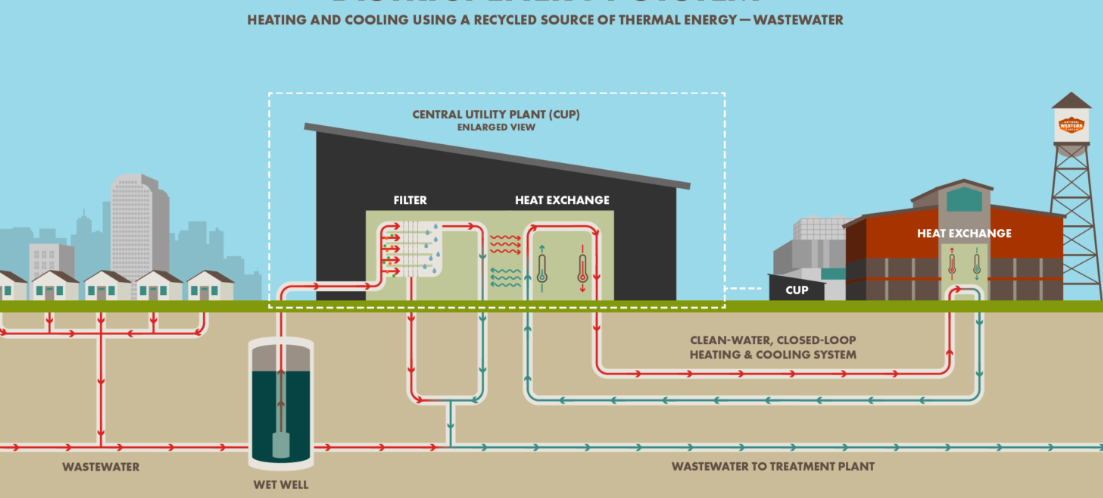
Sewage heat recovery is a sustainable technology that captures thermal energy from wastewater generated by daily activities, using heat exchangers and heat pumps to transfer this warmth to clean water systems for building heating and cooling. This approach can reduce energy consumption by up to 50%, lower greenhouse gas emissions, and mitigate thermal pollution, thereby protecting aquatic ecosystems.
Denver’s National Western Center is implementing one of North America’s largest systems, using wastewater from the Delgany Interceptor to meet about 90% of the campus’s heating and cooling needs. This project serves as a model for urban sustainability and renewable energy solutions.