| Subzero temperatures can cause even interior pipes to freeze
If you’ve ever had to deal with a frozen pipe in your house, then you know just how frustrating this problem can be. No hot showers or baths. No dishwasher or washing machine. It can put a real damper on any plans you might’ve had for the day. Not to mention burst pipes are one of the most common causes of property damage during frigid weather and can cause thousands in water damage—easily $5,000 or more.
Read on below to discover exactly how to locate a frozen pipe in your home safely and easily, along with a few helpful home remedies.
What Causes Frozen Pipes?
Frozen pipes can cause a multitude of problems, chiefly among them a lack of hot water for bathing, no drinking water, and worse. Naturally, the biggest cause for the frozen pipes themselves is consistently cold temperatures.
If water hangs out in a pipe for too long during a winter storm, you could end up with some frozen piping on your hands. The pipes that are most likely to get caught in between a cold and a frost place are:
- Outdoor pipes
- Basement and crawl space piping
- A pipe without much insulation
Do you have those sorts of pipes in your home and live in a cold location? If so, then it’s always good to have someone do regular checks to ensure they’re in good condition.
How to Keep Pipes from Freezing
Once the temperature starts dropping outside, you should take measures inside to keep your pipes warm and water running. As a good rule of thumb, the “temperature alert threshold” is 20° F, especially if you have uninsulated pipes running through an uninsulated space.
- Open up the cabinets that house your plumbing in kitchen and bathroom areas to allow warm air to circulate. (If you have small children, be sure to remove any harmful cleaners and household chemicals.)
- Let your faucets dribble a very tiny amount of water overnight to avoid sitting water in any pipes.
- Raise the temperature of your house to keep pipes warm.
- Keep garage doors closed, especially if there are water supply lines in the garage.
- Keep the thermostat set to the same temperature during the day and night. Again, during a cold snap is not the time to set back the thermostat at night to save a few bucks on your heating bill.
- If you plan to be away during cold weather, leave the heat on in your home, set to a temperature no lower than 55° F.
- For the long term, add insulation to attics, basements, and crawl spaces. Insulation will maintain higher temperatures in those areas. And to prevent drafts, seal cracks and openings around windows, doors, and at sill plates, where the house rests on its foundation.
What Happens If a Frozen Pipe Bursts?
This is only the beginning, though. You might ask, “What happens if a pipe bursts?”
As the Red Cross points out, if the water in the pipe expands too much, then the piping can actually rupture, which is a whole other problem. It’s also one that’s obviously more difficult to fix, as your piping may need to be replaced.
Bad news. It gets even worse: A burst pipe can cause water to pour onto the floor/ceiling. This can result in major water damage and flooding in your home. Depending on the location of the burst pipes, it could even seep from the upper levels down into the lower floors, too.
How to Find a Frozen Pipe in Your Home
If you suspect that you have a frozen pipe in your home, then you want to know which locations to check, as well as how to detect it.
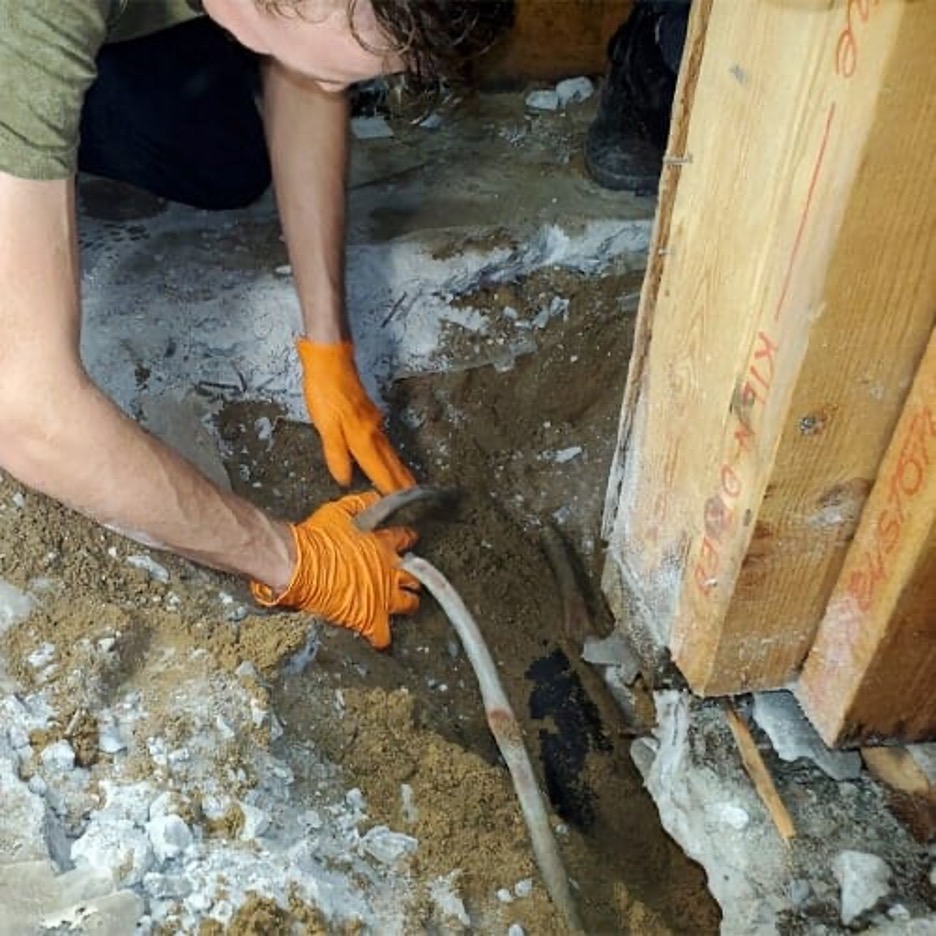 First things first: If you turn on your faucet in a cold winter month, but only a dribble of water comes out, then you can safely assume there’s a frozen pipe somewhere in the house. As we mentioned, a few likely culprits are on exterior walls. Another particularly vulnerable area is anywhere on your home that your water service comes into the house via the foundation.
- Turn on the faucet, and leave it in the “on” and “hot water” positions. This is to keep water running through the pipes so that they will eventually (hopefully) thaw.
- Look in all the likely spaces: outdoor pipes, basement piping, pipes in the crawl space, and any piping that isn’t covered with ample insulation.
- If you can’t find the frozen spot, it might be located in the wall. To detect this, you will likely need to call a licensed plumber with the right equipment. Pipes located behind a wall are obviously much harder to access. Doing so on your own can be very dangerous.
- Once you’ve been able to locate the frozen piping, next you’ll need to find the area where the freezing has occurred.
- After you locate the frozen part of the pipe, you’ll want to thaw it out. You can do this with a number of common home appliances: hairdryer, electric heating pad, space heater, or even by simply wrapping warm towels around the pipe itself.
- IMPORTANT NOTE: Do not use ANY of the following items to thaw out your pipe: blowtorch, kerosene heater, propane heater, charcoal stove, or any type of open flame. These can be incredibly dangerous.
- Keep the heat on the pipe until the full, normal water pressure has come back.
- Finally, be sure to do a double-check by turning on all the faucets in your house. Running each one will reveal any other frozen pipes that might have occurred.
Those are the main steps to follow in order to find and thaw a frozen pipe in your home. Again, if you can’t find the pipe yourself or safely thaw it out, then you should call a trained and licensed plumber to fix the problem for you right away.
If you’re experiencing sewer line issues beyond your ability to fix, our crews are VERY EXPERIENCED and EXPERTS at getting the job done. Give us a call! |